Monday, November 12, 2012

Interview with The Outsiders Director, Kevin Kuchar

Before seeing The Outsiders at Georgetown Prep this weekend, I sat down with the director of the show, Kevin Kuchar, to discuss his career as a director, as well as his choices in this particular production. 


J: Where do you work and why do you choose to direct shows at Georgetown Preparatory School?

K:  I work in the Musical Theatre Department at the Levine School of Music. We do most of our practice at the Strathmore school so I am close by. Three years ago I was the assistant director of a Prep show. Two years ago I was asked if I would be the sole director. I think I come to Prep because I just love working with the boys. The moment you get a freshman, you just can’t say no. Working at Prep is wonderful because it is more than a cast; it is like a family. Theatre is, by nature, a communal activity. The thing about educational theatre, just like professional theatre, is that once you are hooked, you are hooked.

J: Where did you become interested in theatre and directing?

K: I went to college at Viterbo University, which is, as it sounds, a very small school in Wisconsin. I was a Psychology major and I started hanging out with the theatre people; mostly because I just thought they were more fun! I started trying theatre out more intensely and I loved it! I fell in love with it in college and wanted to make it happen in life. I mean, I think it is addicting. It is the most thought provoking art form. We get to take the most thought provoking ideas and make commentaries on culture that are accessible to people.

J: Do you have a favorite show? Is it one that you have directed?

K: Any director who tells you they have a favorite show is a liar! I mean any show you direct has aspects that you love. One director could put on the show Oklahoma and it could be terrible, but the next could put on the best show you have ever seen. So no, I don’t think I have a favorite show. That said, one show does stand out as a pivotal moment in my growth in theatre. Almost twenty years ago I saw James and the Giant Peach. The set was an offset curved peach edge and characters would come out of the peach. I learned so much about what aesthetics can do on stage. I mean this was before a lot of the technology we can use on stage today was even available and yet through the use of creativity and puppetry, amazing things were possible. So I would say that that was a very important show to me, and it made sets very essential to me. I like to make sets that are expandable, integrated, and static because of it.

J: Do you favor a specific methodology when directing a play?

K: No! You really have to see your cast and meet them where they are at. That is the approach I take with my kids. I might incorporate some aspects, but I don’t focus on a particular theory  or style until I know what I am working with.

J: Do you take feedback from the students you direct?

K: Constantly! If you want to give them an experience based on their organic experience, you have to participate in conversation with them.

J: How did you decide on The Outsiders for the Prep players?

K: Well originally we were planning on putting together the show Great Expectations but after the cold reading the first day of auditions, I realized that that show wasn't the right choice for us. We wouldn't have been successful with this cast. You have to stay flexible and pliable when creating a show. That’s how you become successful and make discoveries. The boys wanted to do something physical and with contemporary language. The Outsiders was the perfect choice because, I mean, every other kid reads it in seventh grade. And the relationships between the socs and the greasers are so interesting and relate-able.  You know at Prep, the boys who do theatre are such a small group that they are kind of like outsiders too.

J: Do you have a favorite scene at this point?  Favorite character?

K: I think the “Rumble Scene” is my favorite because they worked really hard on it. There is a  lot of athleticism and bravado, and I think the boys really bonded over it and had fun. I don’t really have a favorite character but in general I just love the ensemble. It is more than an ensemble; it’s a brotherhood. It’s the idea that we are a family because we are chosen to be one, and the idea of each person watching out for the other.

J: What motivated your decision to double cast several of the roles?

K: It makes a bigger cast and gives more opportunities to more people. I believe that theatre is an under-appreciated art and I’ll take the people I can get, especially at a boys’ school.

J: Should the audience expect any surprises?

K: Haha, just that baseball players can act!

~Julie

Thursday, November 1, 2012

We're off to see The Wiz

This past weekend my school brought to the stage the Fall production of The Wiz. After hearing for months about all of the hard work that went into the show, I was very excited on Sunday when I had the chance to see it for myself. Sitting out The Wiz was a difficult decision for me but I certainly learned a lot from watching this amazing and talented cast and crew!

First of all, I was excited to see several people perform who were cast in roles that aren't usual for them and caused them to take on new responsibilities. As a sophomore, I remember being cast as Sir Toby Belch in Twelfth Night and not knowing how I was going to fill the position required of me. At the start of The Wiz production, a couple of the lead characters were feeling a similar way. I realize now, though, that this emotion can spur a performer on to create and take risks that they would never even think of if they found themselves in their usual typecast roles. As I learn more about the role of a director, I think that giving actors opportunities to step out of their comfort zones is one of the greatest gifts they have to offer.

I was so happy to see that each of The Wiz cast members truly grew into their new responsibilities and achieved the huge task of putting together a musical!

And now for the details of the production. The Wiz, a show which hit the stage in 1974, is the more soulful and gritty version of the classic Wizard of Oz. To bring this to light, the cinder block walls and wood floors which make up the bare structure of the theatre were exposed, and  the back wall of the stage was covered in graffiti while the floor was painted with a faded yellow brick road. The set pieces consisted of four large platforms, all on wheels, which were moved throughout the show into different formations for different scenes. When I heard about the way in which the set would be used, I have to admit I was skeptical that it could be pulled off flawlessly, but the technical support proved me wrong, and watching these giant set pieces transform the stage was a highlight of the show for me. When the curtain rose at the start of the show, I was surprised at how having the four platforms close to the front of the stage created an apartment-like image, perfect for the more urban feeling that the show requires. The set was absolutely one of my favorite parts of The Wiz.

Well, I have many more aspects of The Wiz to reflect on so it looks like the rest might have to come out in a series of blog posts...stay tuned!

~Julie

Wednesday, October 3, 2012

Vaudeville and YouTube

I have been working tirelessly on my extended essay, which is a comparison between the Vaudeville and what I believe is the "new vaudeville," YouTube. In light of this research, here is one of my favorite vaudeville acts in the form of a YouTube video!
~Julie

Thursday, September 20, 2012

We Real Cool

Right now in IB Theatre we are revisiting the art of the Neutral Mask, one of my favorite units from last year. One aspect of this type of mask work that each of us in the class have grown interested in is how to use movement economically. How do you get to the heart of an emotion and cut out all of the "fluff" while still fully communicating your story?

While I don't have the answer to this question, the topic reminded me of a poem we read in English class a few weeks ago. It is titled "We Real Cool" and was written by the poet Gwendolyn Brooks in 1959. The simplicity of this poem struck me. It may seem like a few brief lines with a shallow meaning, but is in fact much deeper. 

In exactly 8 lines and 24 words, Brooks tells the story of a group of teenage boys who become delinquents and ruin their lives all for the purpose of having a good time. Ending each line with the seemingly unnatural "We" helps the reader understand the unnatural haste with which the boys proceed. Then, in the last line, the lack of this "We" demonstrates the finality of their actions and shows that the consequences are irreversible. 

So why might any of this matter to a theatre student? Personally, I think Brooks is the perfect example of how one can economically express emotion and tell a story. For Brooks, what makes this poem effective is the raw emotion brought out of such a simple yet tragic story. For us, our Lecoq mask work is most effective when we minimize extraneous actions and focus on the heart of the story we wish to express. Sometimes the most moving things in the world are simply the most universally emotional moments in a persons life, expressed in the most common of terms. 

~ Julie

Tuesday, June 26, 2012

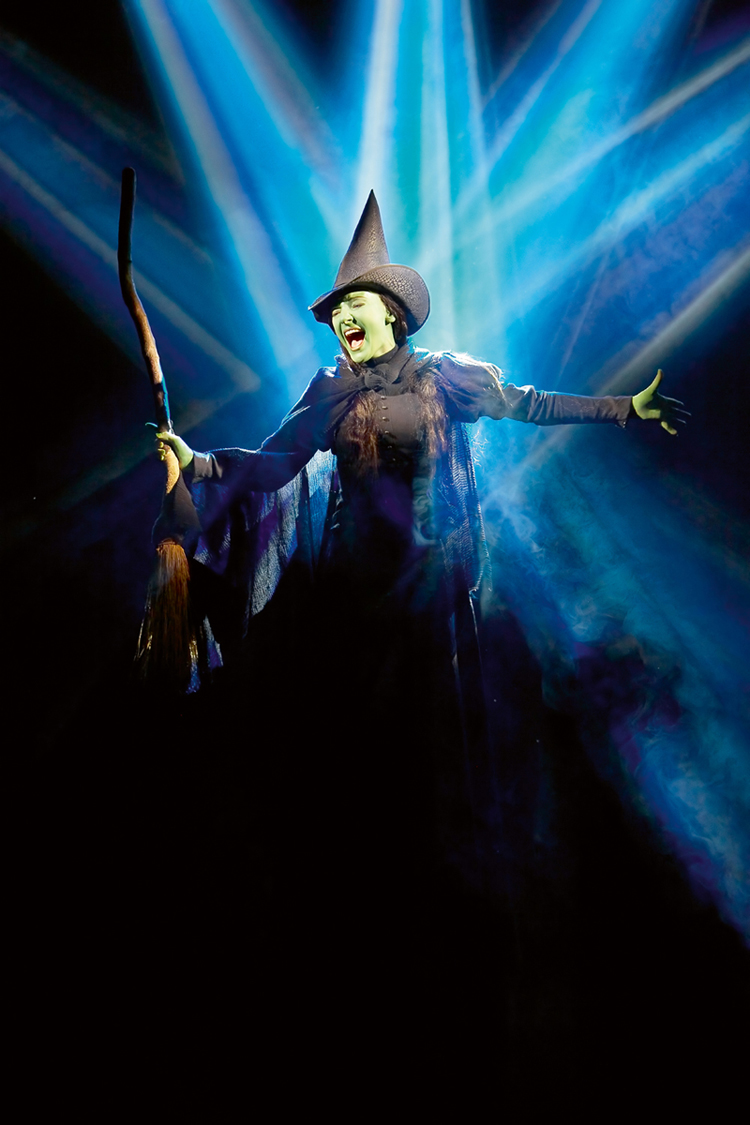
Wicked

During our recent New York trip, my brother and I finally got to seeWicked, my first Broadway musical! As a Christmas gift, our grandparents wanted to get us tickets to a show in New York, and after How to Succeed in Business ended early, we settled on Wicked, one of the most talked about shows in school.

Well I was blown away by how truly fantastic it was. We saw it at the Gershwin Theatre and we had seats in the Orchestra section.

There is no doubt that this is now my favorite show of all time. From the set to the talent to the plot, it is really the perfect mix. I guarantee that Z and I will be singing the music from Wicked for many weeks to come.

*SPOILER ALERT*

The basic plot of the show is that prior to The Wizard of Oz, Glinda the Good Witch, and Elphaba, the Wicked Witch of the West, went to school with each other and were best friends. The show explains how there are links between all the characters and how each of these connections has changed where they end up. It would be too much to go into all of them but some of my favorites were how Elphaba actually created the flying monkeys, along with the lion, the tin man, and the scarecrow. I also loved how the Wizard of Oz was actually Elphaba's father.

Another technique I thought they used brilliantly was how they shaped the characters throughout the show by using visible additions to the props on stage. For example, Nessarose, who eventually became the Wicked Witch of the East, was given the ruby slippers by her father when she went to school at the beginning of the show. I also enjoyed how Glinda gave Elphaba a witch hat as a mean joke, but this eventually turned their hostile relationship into a friendship.

It was an all around great show. I couldn't believe how long it was! The first act was an hour and thirty minutes and the second act was an hour, not including the 15 minute intermission.

Anyway, I can't wait for our next Broadway experience!

~Julie

Monday, May 7, 2012

Chinese Theatre in Parks


While the types of performance I mentioned before are unique and interesting, these are the everyday talents that make Chinese performance unique.

[junk+002.jpg]
The best place to go in China to see a performance is their parks. With the crowded situation in the apartments of big cities, the parks are a great place for people to go to socialize. But they are also home to the "secret" cultural life that you can see for free. People gather to dance to traditional music, do some ballroom dancing, or even learn to dance from one of the pros. Huge crowds can gather around men and women who sing in groups or perform solos. Often times they sing either traditional songs or patriotic ones from the Mao Era. Sometimes singers are even accompanied by musicians and a conductor. People tend to bring their own microphones to accommodate for the large crowds or to draw attention to their talent.

A little further into the park, one might find a more unique kind of entertainment. Those who do Taichi or are skilled with the diablo tend to find the secluded corners of the parks to practice their art. If you are quiet, you can sit nearby and watch the extreme talent of these masters of coordination.

As a performer, I admire the confidence and care-free nature of these people who simply do what they love for the fun of it. They have made use of the space they have and have turned it into a variety show all their own. Without the pressure of the main stage, they have the freedom to make mistakes, learn new skills, and even gain fans. There is something truly beautiful in the innocent enjoyment that these people find in performing.

~Julie

Chinese Theatre on Stage


File:Beijing opera02.jpg
From the palaces to the streets, performance is an integral part of the Chinese culture. As it gets closer to summer, here are some of the kinds of performances I know I'll see when I move around the world for seven weeks.

I'll start with the infamous Peking Opera. One of the most well-known types of theatre in China, it grew out of the eighteenth century when it was popular among the members of the Qing Dynasty. It consists of extravagant costumes and masks which portray both human beings and animals. There is opera style singing as well as very slow and mechanic dancing. It is particularly popular in Beijing, the city from which it's name comes. 


Chinese acrobatics, although not usually used to tell a linear story, are the pinnacle of Chinese theatre. Popular all over China and with people of all ages, the acrobats are trained from a young age to be able to do mind blowing performances with their bodies. From being able to hold themselves completely horizontal from a vertical pole in mid-air to balancing an umbrella on one toe, each act is filled with amazing performances accompanied by great lighting and music.
[January-February+2009+029.jpg]
A less famous category of theatre in China, Chinese New Years plays are extremely common. Around Chinese New Year, which will be on February 10th this coming year, it is traditional to reenact the history of the Chinese Zodiac. In the Zodiac, there are twelve animals that fall in the same order in each twelve years cycle. This order comes from an ancient story in which all of the animals participate in a race. The first animal to finish was the rat, then the ox, and so forth. It is particularly common to put these shows on in schools to help children remember the story of Chinese New Year. (I played the rat in my school's Chinese New Year play when I lived in Beijing!)

~ Julie