~Julie
Wednesday, October 3, 2012
Vaudeville and YouTube
I have been working tirelessly on my extended essay, which is a comparison between the Vaudeville and what I believe is the "new vaudeville," YouTube. In light of this research, here is one of my favorite vaudeville acts in the form of a YouTube video!
~Julie
~Julie

Thursday, September 20, 2012
We Real Cool
 Right now in IB Theatre we are revisiting the art of the Neutral Mask, one of my favorite units from last year. One aspect of this type of mask work that each of us in the class have grown interested in is how to use movement economically. How do you get to the heart of an emotion and cut out all of the "fluff" while still fully communicating your story?
While I don't have the answer to this question, the topic reminded me of a poem we read in English class a few weeks ago. It is titled "We Real Cool" and was written by the poet Gwendolyn Brooks in 1959. The simplicity of this poem struck me. It may seem like a few brief lines with a shallow meaning, but is in fact much deeper.
In exactly 8 lines and 24 words, Brooks tells the story of a group of teenage boys who become delinquents and ruin their lives all for the purpose of having a good time. Ending each line with the seemingly unnatural "We" helps the reader understand the unnatural haste with which the boys proceed. Then, in the last line, the lack of this "We" demonstrates the finality of their actions and shows that the consequences are irreversible.
So why might any of this matter to a theatre student? Personally, I think Brooks is the perfect example of how one can economically express emotion and tell a story. For Brooks, what makes this poem effective is the raw emotion brought out of such a simple yet tragic story. For us, our Lecoq mask work is most effective when we minimize extraneous actions and focus on the heart of the story we wish to express. Sometimes the most moving things in the world are simply the most universally emotional moments in a persons life, expressed in the most common of terms.
~ Julie
Tuesday, June 26, 2012
Wicked
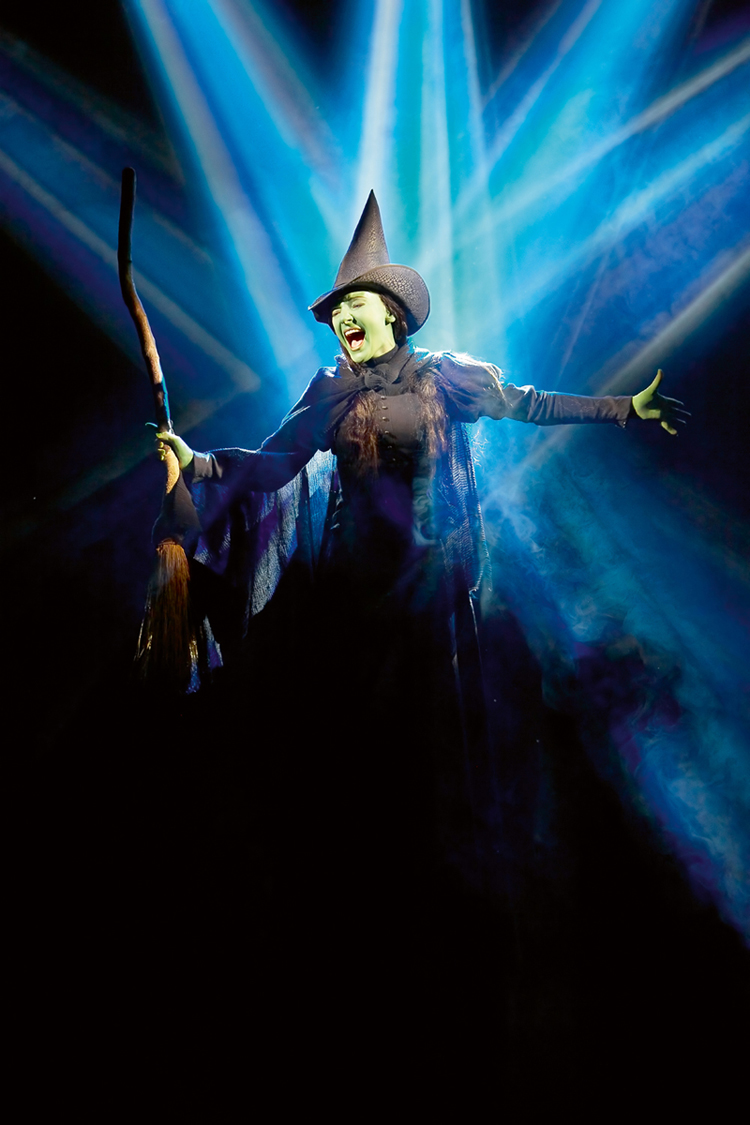
Well I was blown away by how truly fantastic it was. We saw it at the Gershwin Theatre and we had seats in the Orchestra section.
There is no doubt that this is now my favorite show of all time. From the set to the talent to the plot, it is really the perfect mix. I guarantee that Z and I will be singing the music from Wicked for many weeks to come.
*SPOILER ALERT*
The basic plot of the show is that prior to The Wizard of Oz, Glinda the Good Witch, and Elphaba, the Wicked Witch of the West, went to school with each other and were best friends. The show explains how there are links between all the characters and how each of these connections has changed where they end up. It would be too much to go into all of them but some of my favorites were how Elphaba actually created the flying monkeys, along with the lion, the tin man, and the scarecrow. I also loved how the Wizard of Oz was actually Elphaba's father.
Another technique I thought they used brilliantly was how they shaped the characters throughout the show by using visible additions to the props on stage. For example, Nessarose, who eventually became the Wicked Witch of the East, was given the ruby slippers by her father when she went to school at the beginning of the show. I also enjoyed how Glinda gave Elphaba a witch hat as a mean joke, but this eventually turned their hostile relationship into a friendship.
It was an all around great show. I couldn't believe how long it was! The first act was an hour and thirty minutes and the second act was an hour, not including the 15 minute intermission.
Anyway, I can't wait for our next Broadway experience!
~Julie
Monday, May 7, 2012
Chinese Theatre in Parks
While the types of performance I mentioned before are unique and interesting, these are the everyday talents that make Chinese performance unique.
![[junk+002.jpg]](https://blogger.googleusercontent.com/img/b/R29vZ2xl/AVvXsEhMJBBTqd-bb3oMVQwjoSbqmoopqCqo2dVEVORPlWtbTaDjtoVgkZJlNbBIho2kBCdOJ9dYNx4-NtnPvUZY2Cvxn1oqHMYnMpENfqFNYp-KBCeCzKrFeByiytZUv2VUBfG83VvFtA5g8RFX/s1600/junk+002.jpg)
 The best place to go in China to see a performance is their parks. With the crowded situation in the apartments of big cities, the parks are a great place for people to go to socialize. But they are also home to the "secret" cultural life that you can see for free. People gather to dance to traditional music, do some ballroom dancing, or even learn to dance from one of the pros. Huge crowds can gather around men and women who sing in groups or perform solos. Often times they sing either traditional songs or patriotic ones from the Mao Era. Sometimes singers are even accompanied by musicians and a conductor. People tend to bring their own microphones to accommodate for the large crowds or to draw attention to their talent.
A little further into the park, one might find a more unique kind of entertainment. Those who do Taichi or are skilled with the diablo tend to find the secluded corners of the parks to practice their art. If you are quiet, you can sit nearby and watch the extreme talent of these masters of coordination.
As a performer, I admire the confidence and care-free nature of these people who simply do what they love for the fun of it. They have made use of the space they have and have turned it into a variety show all their own. Without the pressure of the main stage, they have the freedom to make mistakes, learn new skills, and even gain fans. There is something truly beautiful in the innocent enjoyment that these people find in performing.
~Julie
Chinese Theatre on Stage


Chinese acrobatics, although not usually used to tell a linear story, are the pinnacle of Chinese theatre. Popular all over China and with people of all ages, the acrobats are trained from a young age to be able to do mind blowing performances with their bodies. From being able to hold themselves completely horizontal from a vertical pole in mid-air to balancing an umbrella on one toe, each act is filled with amazing performances accompanied by great lighting and music.
![[January-February+2009+029.jpg]](https://blogger.googleusercontent.com/img/b/R29vZ2xl/AVvXsEjg89RUlFnpRL_yZ7BzE685ocqKNapB18Rrom4hEmjnNohQlEl47GbI99dqtygEXOVDencwTtqw4X5DV0d7m1CLqvIvUJkkktCzBlAHak4u98VJazdGYqbRXebX1p9bD_rIRlla0aoG4hE/s1600/January-February+2009+029.jpg)
A less famous category of theatre in China, Chinese New Years plays are extremely common. Around Chinese New Year, which will be on February 10th this coming year, it is traditional to reenact the history of the Chinese Zodiac. In the Zodiac, there are twelve animals that fall in the same order in each twelve years cycle. This order comes from an ancient story in which all of the animals participate in a race. The first animal to finish was the rat, then the ox, and so forth. It is particularly common to put these shows on in schools to help children remember the story of Chinese New Year. (I played the rat in my school's Chinese New Year play when I lived in Beijing!)
~ Julie
Wednesday, April 25, 2012
Bring on Your Wrecking Ball

 With such a deep history of music, the E Street Band played a combination of some of their oldest pieces and a bunch from their latest album, Wrecking Ball. Their experience and talent kept them going through numerous requested pieces and oldies that hadn't been performed in decades. I was especially impressed by the ability of the Band's newest member, Jake Clemons, the nephew of Clarence Clemons who passed away this passed year. This young saxophone player had some huge shoes to fill but he rolled right along with the crazy atmosphere of the E Street Band's improvisation.
My favorite part of the evening, though, was watching the music I had been listening to for weeks come to life. On the stage, the reality of the lyrics Springsteen writes mean so much more. For me, this is the reason live performance is so much greater than recordings of any kind. Watching the artist feel the words he writes or even watching the actor delve into the character he has created is a communication with the audience that transcends what is possible on T.V. and in movies. This, I realized, is why I love acting on a stage where human connection with the audience is made possible.
~Julie
Monday, March 19, 2012
You're a Good Man, Charlie Brown

 And once again the end of another great show comes around and the cast of You're a Good Man, Charlie Brown finds itself full of post-show emotions. It is rare that one gets to work with a group of people in such harmony, but this cast was the closest I have been a part of yet! And that's not even to mention the extraordinary talent that each of the actors in the cast possesses! It was a piece of my life that I know I will carry into whatever I pursue next.
But the experience would not be complete without a little bit of reflection and evaluation:
I would be lying if I said that this was what I had planned on doing with my spring semester. And yet, like always, I was brought back to my favorite theatre in the world to play Linus van Pelt in the Woodstock cast of AHC's You're a Good Man, Charlie Brown. But it was only with some serious convincing, particularly from our music director, that I decided to take a risk and jump into my first major role in a musical.
This show taught me so much about my own self-confidence and desire to try out things that might be out of my comfort zone. But even more than that, it taught me how to use the stage as a place for experimentation. I know that I won't get anywhere by hiding away and playing children was a very effective way to learn this lesson. The more I thought about my characterization and watched those around me delve into their's, the more important the simplicity of childhood became in our telling of Charlie Brown's story. Little kids have no problem speaking their minds, or playing the games they want to, or even sounding a little silly sometimes. And while this was what Linus was experiencing on the stage, it was also what I was realizing inside. You're a Good Man, Charlie Brown is full of these kinds of lessons and I hope the audiences could sense how important they really are.
~Julie
Subscribe to:
Posts (Atom)